AI is real, the religion is optional
AI can be transformative without being salvation. A case for using the technology, questioning the hype and keeping human judgement in the room.
Insights
Sep 14, 2026

For a technology supposedly built on intelligence, artificial intelligence has inspired an extraordinary amount of irrational behaviour.
There is the death cult.
AI is coming for the writers, designers, developers, teachers, lawyers and accountants. Soon nobody will work. Then nobody will think. Art will die. Truth will become impossible. Democracy may follow. Depending on who is speaking, civilisation has anywhere from six months to twenty years left.
Then there is the religion.
Every business is now an AI business. Every problem needs an AI solution. Every new model is a revelation. Entire professions are apparently obsolete because somebody generated a passable television commercial during lunch.
The camps appear to hate each other.
I think they agree on something surprisingly fundamental.
Both treat AI as destiny.
One side fears surrendering to it. The other cannot surrender quickly enough.
I would rather use the thing.
I use AI constantly. It has changed how I research, interrogate ideas, explore creative directions, structure information, produce variations and get through the tedious bits that sit between an idea and execution.
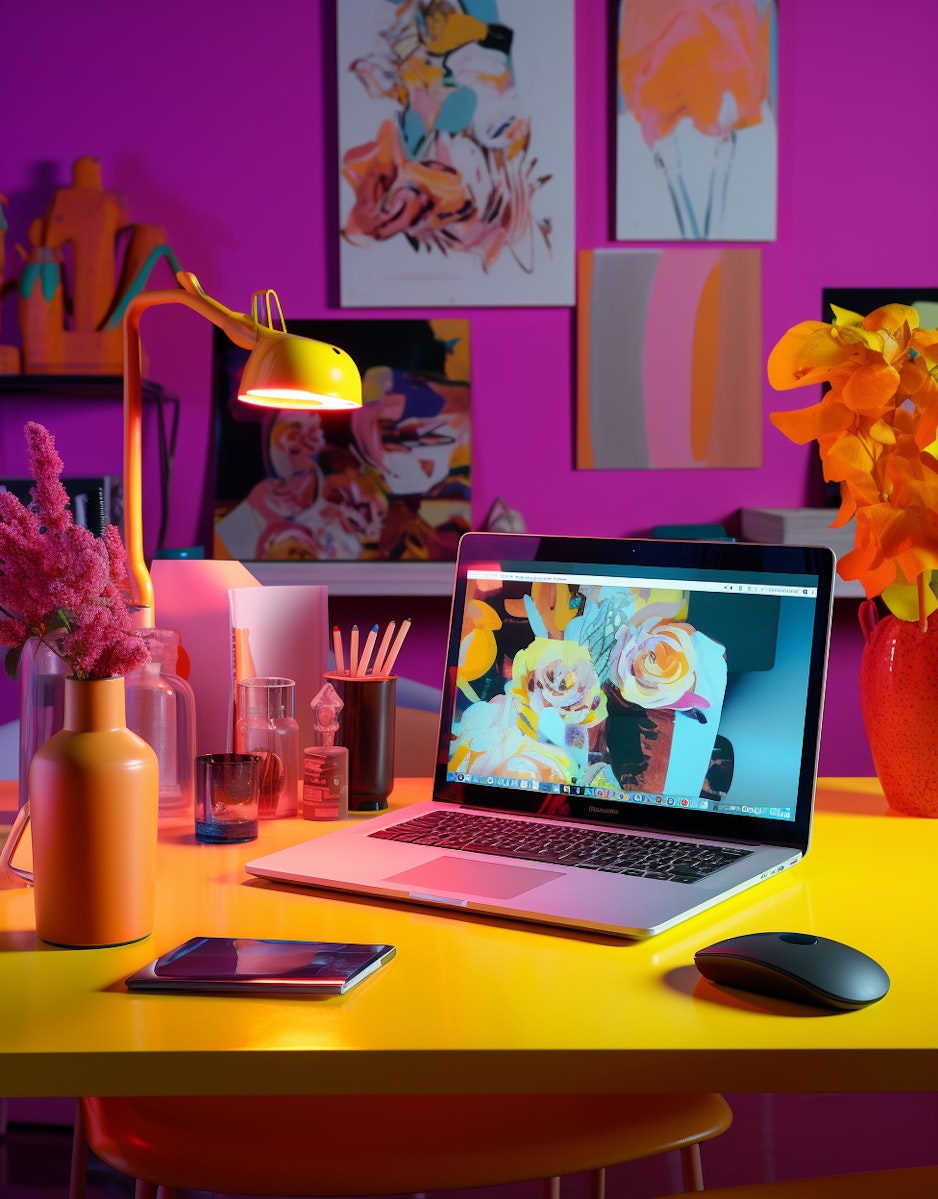
Sometimes it feels genuinely extraordinary.
Sometimes it gives me absolute rubbish with impeccable grammar.
Both experiences are useful.
The problem with the last few years of AI discourse is that capability and mythology became difficult to separate.
A machine generates a convincing image and suddenly photography is dead. It writes acceptable copy and apparently writers are finished. It produces code and software engineering has months to live.
We repeatedly confuse “this technology can do something” with “therefore the human system around that thing is about to disappear.”
Those are not the same statement.
And now some of the exuberance is meeting a much less spiritual force: economics.
After years of extraordinary investment, the conversation around AI is beginning to include harder questions about cost, returns, infrastructure and how quickly all this spending actually becomes profitable.
Good.
Not because AI has failed.
Because reality is useful.
A speculative bubble can form around a technology that remains genuinely important. The internet did not disappear when dot-com valuations collapsed. What disappeared were many of the fantasies about who would win, how quickly and at what price.
AI may be approaching its own version of that distinction.
And perhaps the same correction is already happening in creative work.
For a while, generation itself was astonishing.
Look. It made an image.
Look. It wrote an article.
Look. It created a song, presentation, website, storyboard, video.
Now?
Of course it did.
So can everybody else's.
That is where things become more interesting.
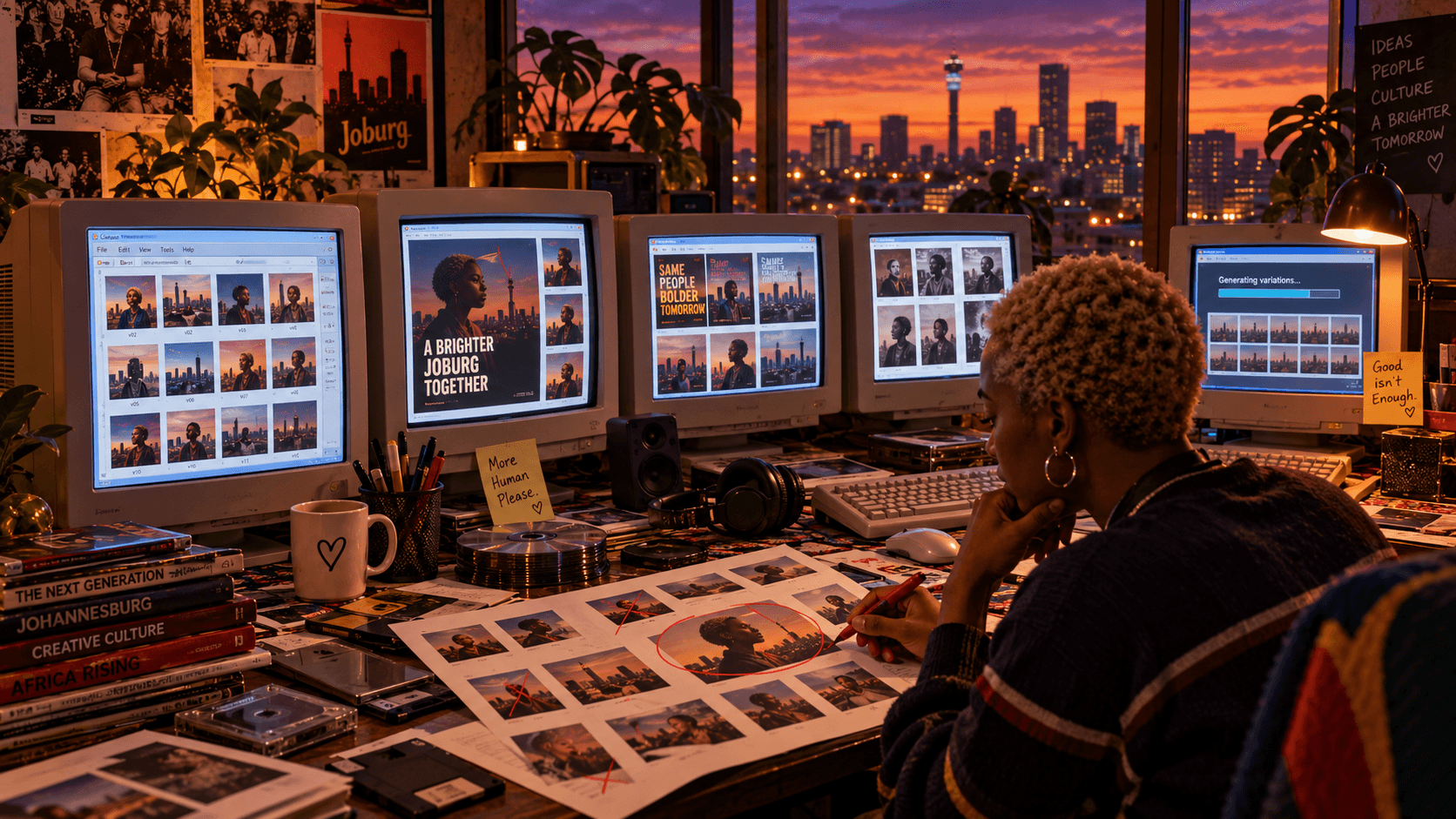
If making becomes easier, deciding becomes more valuable.
Which of the fifty headlines is actually worth publishing?
Which beautiful image looks impressive until you notice that it says absolutely nothing?
Which strategy understands the audience rather than merely containing the word “audience” seventeen times?
Which idea is culturally alive?
Which one sounds like every other brand that typed the same prompt?
Which piece of work should simply be killed?
AI has made production abundant.
It has not made taste abundant.
If anything, it has exposed how much of creative work was never about producing the first available answer.
The valuable part is often recognising that the first answer is not good enough.
I see this constantly in AI-generated work. Technically competent writing with no point of view. Perfectly lit people who appear to have never inhabited Earth. Brand strategies assembled from words nobody could reasonably disagree with. Content so frictionless that there is nothing for a human being to hold onto.
The machines are improving rapidly.
So is the volume of mediocrity they can produce.
That does not frighten me nearly as much as it interests me.
Because perhaps the valuable human skills in an AI-heavy world are not the mystical ones we sometimes reach for when defending ourselves from machines.
Maybe they are considerably more ordinary.


Context. Taste. Curiosity. Editing. Restraint. Cultural fluency. Knowing when something feels wrong before you can fully explain why. Having enough experience to recognise the difference between an answer and the answer.
AI belongs in that process.
It just does not need to become the protagonist.
The death cult gives it too much power.
So does the religion.
I am far more interested in what happens after both calm down.
When AI is no longer a miracle every time it produces something.
When businesses have to prove where it creates actual value.
When creatives stop competing with machines on volume and start asking what deserves to exist at all.
The hype will change. The valuations will change. Some companies will disappear. The tools will become better, cheaper and increasingly ordinary.
And we will still have the same inconvenient problem we had before them.
Someone has to decide what is good.

More to Discover
AI is real, the religion is optional
AI can be transformative without being salvation. A case for using the technology, questioning the hype and keeping human judgement in the room.
Insights
Sep 14, 2026
For a technology supposedly built on intelligence, artificial intelligence has inspired an extraordinary amount of irrational behaviour.
There is the death cult.
AI is coming for the writers, designers, developers, teachers, lawyers and accountants. Soon nobody will work. Then nobody will think. Art will die. Truth will become impossible. Democracy may follow. Depending on who is speaking, civilisation has anywhere from six months to twenty years left.
Then there is the religion.
Every business is now an AI business. Every problem needs an AI solution. Every new model is a revelation. Entire professions are apparently obsolete because somebody generated a passable television commercial during lunch.
The camps appear to hate each other.
I think they agree on something surprisingly fundamental.
Both treat AI as destiny.
One side fears surrendering to it. The other cannot surrender quickly enough.
I would rather use the thing.
I use AI constantly. It has changed how I research, interrogate ideas, explore creative directions, structure information, produce variations and get through the tedious bits that sit between an idea and execution.
Sometimes it feels genuinely extraordinary.
Sometimes it gives me absolute rubbish with impeccable grammar.
Both experiences are useful.
The problem with the last few years of AI discourse is that capability and mythology became difficult to separate.
A machine generates a convincing image and suddenly photography is dead. It writes acceptable copy and apparently writers are finished. It produces code and software engineering has months to live.
We repeatedly confuse “this technology can do something” with “therefore the human system around that thing is about to disappear.”
Those are not the same statement.
And now some of the exuberance is meeting a much less spiritual force: economics.
After years of extraordinary investment, the conversation around AI is beginning to include harder questions about cost, returns, infrastructure and how quickly all this spending actually becomes profitable.
Good.
Not because AI has failed.
Because reality is useful.
A speculative bubble can form around a technology that remains genuinely important. The internet did not disappear when dot-com valuations collapsed. What disappeared were many of the fantasies about who would win, how quickly and at what price.
AI may be approaching its own version of that distinction.
And perhaps the same correction is already happening in creative work.
For a while, generation itself was astonishing.
Look. It made an image.
Look. It wrote an article.
Look. It created a song, presentation, website, storyboard, video.
Now?
Of course it did.
So can everybody else's.
That is where things become more interesting.
If making becomes easier, deciding becomes more valuable.
Which of the fifty headlines is actually worth publishing?
Which beautiful image looks impressive until you notice that it says absolutely nothing?
Which strategy understands the audience rather than merely containing the word “audience” seventeen times?
Which idea is culturally alive?
Which one sounds like every other brand that typed the same prompt?
Which piece of work should simply be killed?
AI has made production abundant.
It has not made taste abundant.
If anything, it has exposed how much of creative work was never about producing the first available answer.
The valuable part is often recognising that the first answer is not good enough.
I see this constantly in AI-generated work. Technically competent writing with no point of view. Perfectly lit people who appear to have never inhabited Earth. Brand strategies assembled from words nobody could reasonably disagree with. Content so frictionless that there is nothing for a human being to hold onto.
The machines are improving rapidly.
So is the volume of mediocrity they can produce.
That does not frighten me nearly as much as it interests me.
Because perhaps the valuable human skills in an AI-heavy world are not the mystical ones we sometimes reach for when defending ourselves from machines.
Maybe they are considerably more ordinary.
Context. Taste. Curiosity. Editing. Restraint. Cultural fluency. Knowing when something feels wrong before you can fully explain why. Having enough experience to recognise the difference between an answer and the answer.
AI belongs in that process.
It just does not need to become the protagonist.
The death cult gives it too much power.
So does the religion.
I am far more interested in what happens after both calm down.
When AI is no longer a miracle every time it produces something.
When businesses have to prove where it creates actual value.
When creatives stop competing with machines on volume and start asking what deserves to exist at all.
The hype will change. The valuations will change. Some companies will disappear. The tools will become better, cheaper and increasingly ordinary.
And we will still have the same inconvenient problem we had before them.
Someone has to decide what is good.
More to Discover
AI is real, the religion is optional
AI can be transformative without being salvation. A case for using the technology, questioning the hype and keeping human judgement in the room.
Insights
Sep 14, 2026
For a technology supposedly built on intelligence, artificial intelligence has inspired an extraordinary amount of irrational behaviour.
There is the death cult.
AI is coming for the writers, designers, developers, teachers, lawyers and accountants. Soon nobody will work. Then nobody will think. Art will die. Truth will become impossible. Democracy may follow. Depending on who is speaking, civilisation has anywhere from six months to twenty years left.
Then there is the religion.
Every business is now an AI business. Every problem needs an AI solution. Every new model is a revelation. Entire professions are apparently obsolete because somebody generated a passable television commercial during lunch.
The camps appear to hate each other.
I think they agree on something surprisingly fundamental.
Both treat AI as destiny.
One side fears surrendering to it. The other cannot surrender quickly enough.
I would rather use the thing.
I use AI constantly. It has changed how I research, interrogate ideas, explore creative directions, structure information, produce variations and get through the tedious bits that sit between an idea and execution.
Sometimes it feels genuinely extraordinary.
Sometimes it gives me absolute rubbish with impeccable grammar.
Both experiences are useful.
The problem with the last few years of AI discourse is that capability and mythology became difficult to separate.
A machine generates a convincing image and suddenly photography is dead. It writes acceptable copy and apparently writers are finished. It produces code and software engineering has months to live.
We repeatedly confuse “this technology can do something” with “therefore the human system around that thing is about to disappear.”
Those are not the same statement.
And now some of the exuberance is meeting a much less spiritual force: economics.
After years of extraordinary investment, the conversation around AI is beginning to include harder questions about cost, returns, infrastructure and how quickly all this spending actually becomes profitable.
Good.
Not because AI has failed.
Because reality is useful.
A speculative bubble can form around a technology that remains genuinely important. The internet did not disappear when dot-com valuations collapsed. What disappeared were many of the fantasies about who would win, how quickly and at what price.
AI may be approaching its own version of that distinction.
And perhaps the same correction is already happening in creative work.
For a while, generation itself was astonishing.
Look. It made an image.
Look. It wrote an article.
Look. It created a song, presentation, website, storyboard, video.
Now?
Of course it did.
So can everybody else's.
That is where things become more interesting.
If making becomes easier, deciding becomes more valuable.
Which of the fifty headlines is actually worth publishing?
Which beautiful image looks impressive until you notice that it says absolutely nothing?
Which strategy understands the audience rather than merely containing the word “audience” seventeen times?
Which idea is culturally alive?
Which one sounds like every other brand that typed the same prompt?
Which piece of work should simply be killed?
AI has made production abundant.
It has not made taste abundant.
If anything, it has exposed how much of creative work was never about producing the first available answer.
The valuable part is often recognising that the first answer is not good enough.
I see this constantly in AI-generated work. Technically competent writing with no point of view. Perfectly lit people who appear to have never inhabited Earth. Brand strategies assembled from words nobody could reasonably disagree with. Content so frictionless that there is nothing for a human being to hold onto.
The machines are improving rapidly.
So is the volume of mediocrity they can produce.
That does not frighten me nearly as much as it interests me.
Because perhaps the valuable human skills in an AI-heavy world are not the mystical ones we sometimes reach for when defending ourselves from machines.
Maybe they are considerably more ordinary.
Context. Taste. Curiosity. Editing. Restraint. Cultural fluency. Knowing when something feels wrong before you can fully explain why. Having enough experience to recognise the difference between an answer and the answer.
AI belongs in that process.
It just does not need to become the protagonist.
The death cult gives it too much power.
So does the religion.
I am far more interested in what happens after both calm down.
When AI is no longer a miracle every time it produces something.
When businesses have to prove where it creates actual value.
When creatives stop competing with machines on volume and start asking what deserves to exist at all.
The hype will change. The valuations will change. Some companies will disappear. The tools will become better, cheaper and increasingly ordinary.
And we will still have the same inconvenient problem we had before them.
Someone has to decide what is good.