What 24/7 television taught me about the internet
From live television to memes, fandoms and 24/7 reality TV, a reflection on 13 years spent learning how culture moves, mutates and occasionally refuses to follow the plan.
Insights
Sep 13, 2026
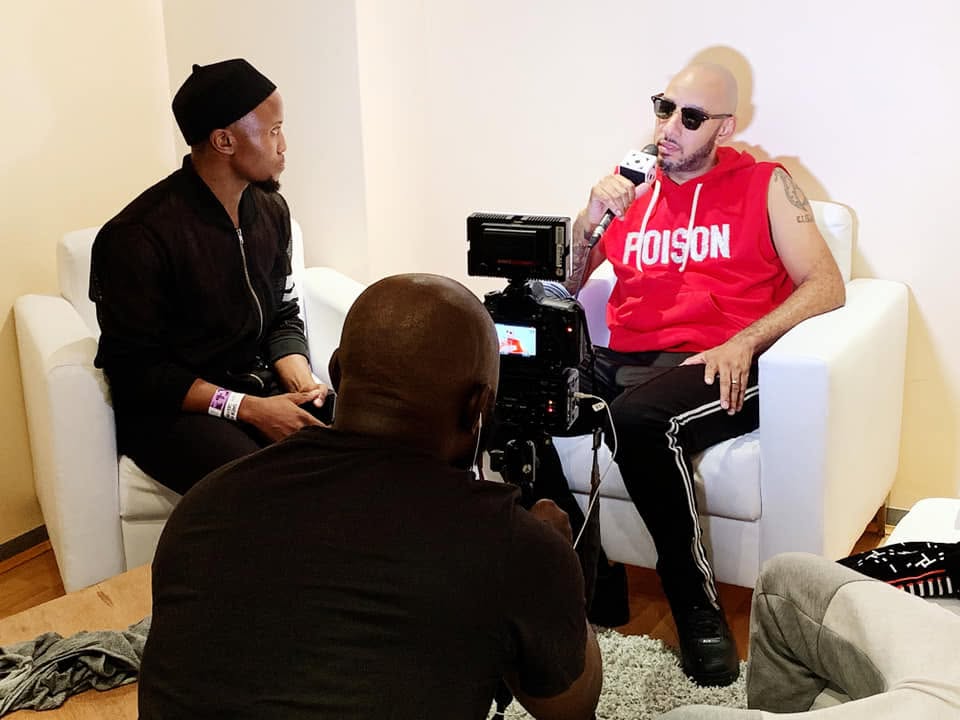
For most of my career, the words Convergence at the Speed of Culture have loomed outside the building where I work. A massive billboard carrying the company’s ethos: broadcast, digital, events and marketing brought together quickly enough to keep pace with culture.
I joined in 2014, working around shows like V-Entertainment on VUZU and Turn Up on Channel O. TikTok did not exist. Instagram was still primarily a place for photographs. Television still held a particular kind of cultural authority.
But the walls were already coming down.
A moment would air and immediately begin another life online. A line became a tweet. A look became a GIF. Something intended as a minor beat could become the only thing anyone remembered.
I began noticing that the version of the show people talked about was not always the version we had made. The audience was making one too.
South Africa will teach you this quickly.

Our internet culture moves between languages, communities and references at frightening speed. A phrase can begin on television, get chopped up on WhatsApp, take on a completely different meaning on X, and return to everyday conversation barely resembling what started the journey.
“Ten past four” emerged from a serious crime report. “Make the pots to happen” became part of the national vocabulary. We take fragments of public life and remix them relentlessly.
Then we layer them. An old television reaction meets a new political scandal. Somebody answers with a lyric. Someone changes one word in a familiar phrase. Eventually you’re laughing at something that would require a flowchart to explain to somebody who arrived halfway through.
That is why I’ve always found the language of “trends” inadequate.
Knowing that a joke exists is not the same as knowing what it means now, why it is funny, whether it is being used sincerely or ironically, or whether it died three weeks ago. By the time a cultural reference has been identified, explained, put into a presentation, and approved for Thursday at 2 PM, South Africa may already be laughing at something else.
Then I started working around 24/7 reality television, and everything sped up.

Our culture moves at a frightening speed, and the internet seems to have given one of our favourite national pastimes, taking language and doing absolutely whatever we want with it, an industrial production line.
A phrase can begin on television, pass through X, get chopped up on WhatsApp, acquire a completely different application on TikTok and return to everyday conversation barely resembling the thing that started the journey.
Sometimes the source material is funny. Sometimes it emphatically is not.
“Ten past four” emerged from a serious crime report. “Make the pots to happen” became memorable because of the peculiar construction of the sentence itself. Over the years, South African popular culture has accumulated an enormous library of these fragments: things said by politicians, reality stars, news subjects, celebrities and ordinary people who had no idea they were contributing a new phrase to the national vocabulary.
Someone says something at 11:13. Within minutes, viewers are quoting it. Someone clips the exchange. Another person notices the facial expression of someone sitting silently in the background. That becomes the meme. A nickname appears. Old footage is retrieved. By lunchtime there are factions. By evening there is lore.
None of this appears in a content calendar.
Audiences don’t simply consume culture. They work on it. They edit it, archive it, defend it, ridicule it and occasionally improve it. I’ve watched language created by audiences around a show eventually find its way back into the show itself.
Television becomes internet becomes culture becomes television again.
I suppose the billboard people would call that convergence.
Twenty-four-hour television also cures you of the belief that more content means more moments. Most things that happen are simply things that happened. The harder skill is recognising the difference between an incident and the thing everyone will be talking about tomorrow.
That requires speed, but mostly it requires attention.
The same is true of reactive content. When something lands online minutes after it happens, the speed is only the visible part. Behind it are people watching, access to footage, editorial judgement, clear roles and enough trust to make decisions while the moment is still alive.
The post is fast because the thinking did not begin from zero.
After twelve years, I’m less interested in whether a brand can move at the speed of culture than whether it can read culture while it is moving.
The comments are information. The memes are information. So are the arguments, the nicknames and the fact that nobody is talking about the thing you were certain they would.
You cannot control what an audience will notice, reinterpret, ridicule or carry forward. You can only become better at recognising the rhythms.
Those words are still outside the building: Convergence at the Speed of Culture.
I understand them better now than I did in 2014.
But after twelve years, I’d probably put something simpler on the billboard.
Pay attention.
More to Discover

What 24/7 television taught me about the internet
From live television to memes, fandoms and 24/7 reality TV, a reflection on 13 years spent learning how culture moves, mutates and occasionally refuses to follow the plan.
Insights
Sep 13, 2026
For most of my career, the words Convergence at the Speed of Culture have loomed outside the building where I work. A massive billboard carrying the company’s ethos: broadcast, digital, events and marketing brought together quickly enough to keep pace with culture.
I joined in 2014, working around shows like V-Entertainment on VUZU and Turn Up on Channel O. TikTok did not exist. Instagram was still primarily a place for photographs. Television still held a particular kind of cultural authority.
But the walls were already coming down.
A moment would air and immediately begin another life online. A line became a tweet. A look became a GIF. Something intended as a minor beat could become the only thing anyone remembered.
I began noticing that the version of the show people talked about was not always the version we had made. The audience was making one too.
South Africa will teach you this quickly.
Our internet culture moves between languages, communities and references at frightening speed. A phrase can begin on television, get chopped up on WhatsApp, take on a completely different meaning on X, and return to everyday conversation barely resembling what started the journey.
“Ten past four” emerged from a serious crime report. “Make the pots to happen” became part of the national vocabulary. We take fragments of public life and remix them relentlessly.
Then we layer them. An old television reaction meets a new political scandal. Somebody answers with a lyric. Someone changes one word in a familiar phrase. Eventually you’re laughing at something that would require a flowchart to explain to somebody who arrived halfway through.
That is why I’ve always found the language of “trends” inadequate.
Knowing that a joke exists is not the same as knowing what it means now, why it is funny, whether it is being used sincerely or ironically, or whether it died three weeks ago. By the time a cultural reference has been identified, explained, put into a presentation, and approved for Thursday at 2 PM, South Africa may already be laughing at something else.
Then I started working around 24/7 reality television, and everything sped up.
Our culture moves at a frightening speed, and the internet seems to have given one of our favourite national pastimes, taking language and doing absolutely whatever we want with it, an industrial production line.
A phrase can begin on television, pass through X, get chopped up on WhatsApp, acquire a completely different application on TikTok and return to everyday conversation barely resembling the thing that started the journey.
Sometimes the source material is funny. Sometimes it emphatically is not.
“Ten past four” emerged from a serious crime report. “Make the pots to happen” became memorable because of the peculiar construction of the sentence itself. Over the years, South African popular culture has accumulated an enormous library of these fragments: things said by politicians, reality stars, news subjects, celebrities and ordinary people who had no idea they were contributing a new phrase to the national vocabulary.
Someone says something at 11:13. Within minutes, viewers are quoting it. Someone clips the exchange. Another person notices the facial expression of someone sitting silently in the background. That becomes the meme. A nickname appears. Old footage is retrieved. By lunchtime there are factions. By evening there is lore.
None of this appears in a content calendar.
Audiences don’t simply consume culture. They work on it. They edit it, archive it, defend it, ridicule it and occasionally improve it. I’ve watched language created by audiences around a show eventually find its way back into the show itself.
Television becomes internet becomes culture becomes television again.
I suppose the billboard people would call that convergence.
Twenty-four-hour television also cures you of the belief that more content means more moments. Most things that happen are simply things that happened. The harder skill is recognising the difference between an incident and the thing everyone will be talking about tomorrow.
That requires speed, but mostly it requires attention.
The same is true of reactive content. When something lands online minutes after it happens, the speed is only the visible part. Behind it are people watching, access to footage, editorial judgement, clear roles and enough trust to make decisions while the moment is still alive.
The post is fast because the thinking did not begin from zero.
After twelve years, I’m less interested in whether a brand can move at the speed of culture than whether it can read culture while it is moving.
The comments are information. The memes are information. So are the arguments, the nicknames and the fact that nobody is talking about the thing you were certain they would.
You cannot control what an audience will notice, reinterpret, ridicule or carry forward. You can only become better at recognising the rhythms.
Those words are still outside the building: Convergence at the Speed of Culture.
I understand them better now than I did in 2014.
But after twelve years, I’d probably put something simpler on the billboard.
Pay attention.
More to Discover
What 24/7 television taught me about the internet
From live television to memes, fandoms and 24/7 reality TV, a reflection on 13 years spent learning how culture moves, mutates and occasionally refuses to follow the plan.
Insights
Sep 13, 2026
For most of my career, the words Convergence at the Speed of Culture have loomed outside the building where I work. A massive billboard carrying the company’s ethos: broadcast, digital, events and marketing brought together quickly enough to keep pace with culture.
I joined in 2014, working around shows like V-Entertainment on VUZU and Turn Up on Channel O. TikTok did not exist. Instagram was still primarily a place for photographs. Television still held a particular kind of cultural authority.
But the walls were already coming down.
A moment would air and immediately begin another life online. A line became a tweet. A look became a GIF. Something intended as a minor beat could become the only thing anyone remembered.
I began noticing that the version of the show people talked about was not always the version we had made. The audience was making one too.
South Africa will teach you this quickly.
Our internet culture moves between languages, communities and references at frightening speed. A phrase can begin on television, get chopped up on WhatsApp, take on a completely different meaning on X, and return to everyday conversation barely resembling what started the journey.
“Ten past four” emerged from a serious crime report. “Make the pots to happen” became part of the national vocabulary. We take fragments of public life and remix them relentlessly.
Then we layer them. An old television reaction meets a new political scandal. Somebody answers with a lyric. Someone changes one word in a familiar phrase. Eventually you’re laughing at something that would require a flowchart to explain to somebody who arrived halfway through.
That is why I’ve always found the language of “trends” inadequate.
Knowing that a joke exists is not the same as knowing what it means now, why it is funny, whether it is being used sincerely or ironically, or whether it died three weeks ago. By the time a cultural reference has been identified, explained, put into a presentation, and approved for Thursday at 2 PM, South Africa may already be laughing at something else.
Then I started working around 24/7 reality television, and everything sped up.
Our culture moves at a frightening speed, and the internet seems to have given one of our favourite national pastimes, taking language and doing absolutely whatever we want with it, an industrial production line.
A phrase can begin on television, pass through X, get chopped up on WhatsApp, acquire a completely different application on TikTok and return to everyday conversation barely resembling the thing that started the journey.
Sometimes the source material is funny. Sometimes it emphatically is not.
“Ten past four” emerged from a serious crime report. “Make the pots to happen” became memorable because of the peculiar construction of the sentence itself. Over the years, South African popular culture has accumulated an enormous library of these fragments: things said by politicians, reality stars, news subjects, celebrities and ordinary people who had no idea they were contributing a new phrase to the national vocabulary.
Someone says something at 11:13. Within minutes, viewers are quoting it. Someone clips the exchange. Another person notices the facial expression of someone sitting silently in the background. That becomes the meme. A nickname appears. Old footage is retrieved. By lunchtime there are factions. By evening there is lore.
None of this appears in a content calendar.
Audiences don’t simply consume culture. They work on it. They edit it, archive it, defend it, ridicule it and occasionally improve it. I’ve watched language created by audiences around a show eventually find its way back into the show itself.
Television becomes internet becomes culture becomes television again.
I suppose the billboard people would call that convergence.
Twenty-four-hour television also cures you of the belief that more content means more moments. Most things that happen are simply things that happened. The harder skill is recognising the difference between an incident and the thing everyone will be talking about tomorrow.
That requires speed, but mostly it requires attention.
The same is true of reactive content. When something lands online minutes after it happens, the speed is only the visible part. Behind it are people watching, access to footage, editorial judgement, clear roles and enough trust to make decisions while the moment is still alive.
The post is fast because the thinking did not begin from zero.
After twelve years, I’m less interested in whether a brand can move at the speed of culture than whether it can read culture while it is moving.
The comments are information. The memes are information. So are the arguments, the nicknames and the fact that nobody is talking about the thing you were certain they would.
You cannot control what an audience will notice, reinterpret, ridicule or carry forward. You can only become better at recognising the rhythms.
Those words are still outside the building: Convergence at the Speed of Culture.
I understand them better now than I did in 2014.
But after twelve years, I’d probably put something simpler on the billboard.
Pay attention.